23 mai 2004, 01:13
The Africana QA: Van Hunt
Artists like Van Hunt, who are young black and talented, but don't rap or have dreds or cornrows, are having an increasingly harder fitting into established industry categories.
Email Letter to the Editor
By Ken Gibbs
At first glance, everything about 26-year-old R&B newcomer Van Hunt appears strange. But it's not the usual calculated quirkiness that we've come to expect from artists more interested in their craft than their commercial viability. Van Hunt doesn't have flowing locks, trademark shades or a fresh crop of cornrows. It starts with his name, which sounds like a classic pseudonym or gimmick but isn't. He's actually named after his father — a part-time painter/part-time pimp — who Hunt credits as the catalyst behind the suave and seductive sound found on his under-promoted yet critically acclaimed eponymous debut.
Hunt, a Dayton, Ohio native who now lives in Atlanta, won't be familiar to anyone not interested in the music enough to scrutinize the fine print of album liner notes, but he has been involved behind the scenes with some of the industry's big stars. He first caught peoples' attention in '97 when he wrote Dionne Farris' "Hopeless," one of the more memorable tracks off of the Love Jones soundtrack. Since then Hunt has also worked with Alicia Keyes, co-written for Cree Summers on her Street Fairie album, and written and produced for Rashaan Patterson on Love In Stereo.
Each experience gave Hunt more insight into the hectic lives of the artists he worked with, and eventually led to him feeling confident enough in his own vocal abilities to take center stage. However, it wasn't until he met American Idol's Randy Jackson that Hunt was convinced that he was ready to make the transition. After a few more exchanges, where Jackson critiqued and Hunt struggled to decide if the feedback was sincere, their bond was formed. And when Hunt got his deal at Capitol Records, one of his top two choices, he immediately chose Jackson to be his manager. Unfortunately, Hunt's superstar affiliations and the warm reception his music has received from critics hasn't been able to substitute for the lack of promotion that Capitol's given him, which also speaks to the ongoing problem of labels being confused about how to market black artists who don't fit into the traditional categories of R&B or hip hop.
Africana recently spoke to Hunt, who had just returned from a small tour and is relaxing as the buzz around songs like "Seconds of Pleasure" and "Dust" slowly builds. Here is what he had to say.
It's interesting that you introduce yourself through your father. But I was confused, is he a painter or a pimp?
Actually he's a visual artist. He paints and just dabbles in a bunch of things, like many fathers have, in an effort to take care of himself and his family. I was just speaking on that and even more so just his friends and the atmosphere that surrounded him and the parts that I was able to see 'cause I was actually raised by my mother. But when I spent time with him [those things] became even more highlighted, obviously, like any child with his father. I just remember those times and it definitely just sparked my imagination.
How have your early memories of your father, his friends, and that atmosphere played into the creation of your music?
Well honestly, it's the original inspiration for it. It's the thing that was a catalyst for all of what you hear now. Maybe the next album will be based on something else. I don't know; I've done my father now, so...
You sing, produce and perform. Is everything we hear on the album done by you?
Well, originally when I turned in the album, yes. But I agreed to allow other musicians to come in 'cause there was a budget there and there was no rush to put out a record because Capitol had just came under new management and realistically they needed about a year to work the kinks out. There wasn't a real rush to put the record out so I took that time, invited some musicians down to work with some new engineers, new gear, new studios, and you know, basically I just trumped across the United States and recorded the album.
You've worked behind the scenes with A-list artists like Alicia Keyes and Dionne Farris for years, and yet you're only now rising to the forefront. What's taken so long?
Honestly, I wasn't interested in doing it. I never wanted to be out as a product. Being able to play guitar and keys for other artists gave me an opportunity to see up close and personal what it's like for them, and it was just something that I never wanted to really do. But then after I met Randy, my manager, you know, he gave me a different perspective on it and I started looking at those things with a more investigative eye and seeing the dos and don'ts of being an artist. I'm still learning, I still make mistakes and sometimes it's tough. But I realize that I was made for this 'cause I really think that it wears well on me, I dig it.
Randy Jackson is an interesting character, being a judge for American Idol and all. How did you come to meet him and why did you choose him as your manager?
Well, he was A&R for Dionne Farris at Columbia and that was the first artist, first song I had on the radio. Basically I sent him a bunch of songs for her and they both picked out that particular song, "Hopeless." That was just the start of it all, then we just kept in contact. I, like probably most people - he's a very jovial cat and not very inviting at first as far as to his own personality - wasn't sure if he was being sincere, but as we kept talking I felt the truth in a lot of things he was saying as far as his critique of what I was doing. It started helping me 'cause he's a really, really intelligent cat. Once I got a deal and I needed to navigate my way through this maze, it was a pretty easy decision to have him help me through it, as my manager.
In your bio it says that you don't like the label neo soul?
You know, you make this sound like I'm trying to dis what's happenin'.
That's not my intent.
Okay. Well if you say that, then cool, 'cause that's definitely not even in my personality. I'm not judgmental at all. I think that music today represents the power of the '90s and what it was, which was more about making money than making music. That was how the bling-bling came about and the whole mentality towards that. All those people don't think like that, I know them, so I know they all don't. Some of 'em sit at home and explore their own inner and self-thoughts and do yoga and all kinds of sh*t like… [But] when they're in front of the camera they realize that what they're selling is a completely different product than what you might call a product like mine, which is really musically based. That's the only thing I was saying.
Did having a style that didn't easily fit into any of the established genres make it hard to get a deal?
Once I put together a demo that I liked it was all positive, to be honest with you. Now during my formative years as a songwriter, I got dogged out a lot! When I first got to Atlanta I came up with some songs, I was trying to write for some people and I gave it to a cat who's an engineer, an award-winning engineer - he's a good friend of mine now - named Alvin Spice, but he's engineered records for TLC, a lot of Dallas Austin records and Boyz II Men. He was like, "Dude, this is awful. The singin' is flat, the songs are terrible… you got heart, you got some talent, but you need to start all over." And I did, man, I took it in stride and went back home and did my homework. All of the criticism kept getting lighter and lighter and more and more positive, and it got to a point where every song I did nobody had anything bad to say.
First published: March 23, 2004
About the Author
Ken Gibbs is entertainment editor at Africana.com.



 Sorry pour l'image......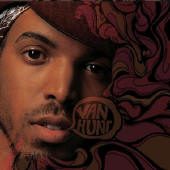
 )
)








 :jump:
















 Turm my TV on et The lowest One of my desires sont Mortelles...du Psyché-Tribal Funk.....ce mec est 1 mix de SLY/PRINCE/STEVIE WONDER/CURTIS MAYFIELD/TTD.......pour moi 1 Artiste au potentiel ENORME...le digne successeur de PRINCE!